Land Drainage Solutions from AJ Gammond
Waterlogged ground can cause problems on farms, building sites, gardens, paddocks and landscaped areas. The right drainage system can help remove excess water, improve ground conditions and keep land usable throughout the year.
At AJ Gammond Agricultural & Civil Stores, we supply drainage products for agricultural, civil engineering, landscaping and general building applications.
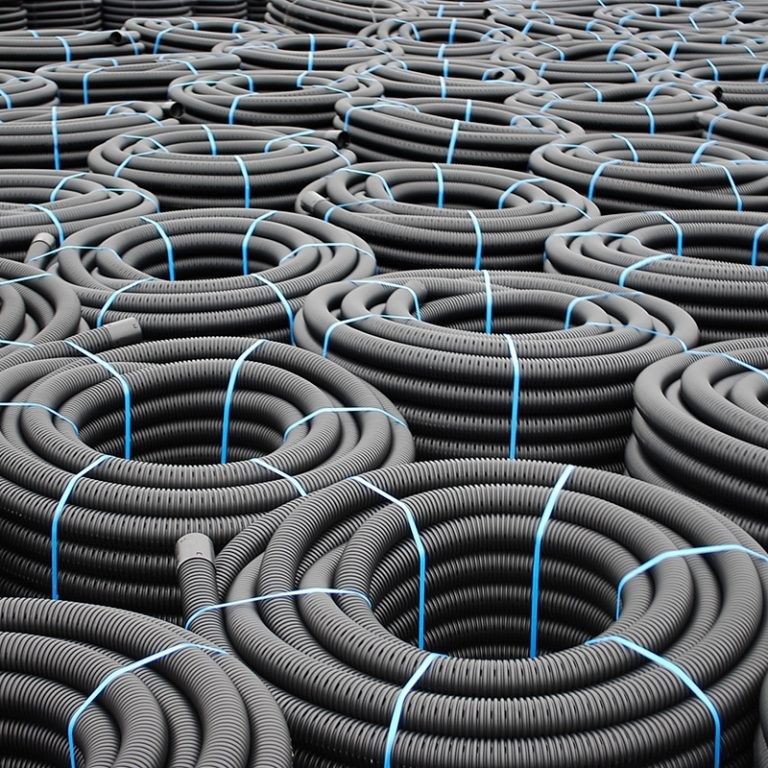
From perforated land drain and drainage fittings to larger underground drainage systems, we can help you choose the right products for your project.
What Is Land Drainage?
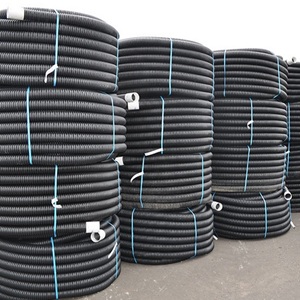
Land drainage is designed to collect excess water from the ground and move it towards a suitable outlet.
Perforated drainage pipe is installed underground, allowing water from the surrounding soil to enter the pipe through the perforations. The collected water then flows towards a main drain, ditch, soakaway or other suitable discharge point.
For agricultural land, effective drainage can reduce waterlogging, improve access for machinery and help maintain productive ground.
Perforated or Solid Drainage Pipe?
One of the most important decisions is choosing the correct type of pipe.
Perforated Land Drain
Perforated pipe collects water from the surrounding ground.
It is commonly used for:
- Agricultural field drainage
- Paddocks
- Waterlogged gardens
- Lawns and sports areas
- Landscaping
- Interceptor drains
- Areas suffering from excess groundwater
The perforations allow water to enter the pipe before being carried towards the drainage outlet.
Solid Drainage Pipe
Solid pipe carries water from one location to another.
It is normally used after the water has been collected by the drainage system, for example to connect a land drain to an outfall, ditch, chamber or other suitable discharge point.
Don’t use perforated pipe where you need to simply carry water away — perforated pipe is designed to collect water along its length.
How Does a Land Drainage System Work?
A typical system consists of:
1. Perforated land drain
Collects excess water from the surrounding soil.
2. Drainage stone or suitable aggregate
Allows water to move freely around the pipe.
3. Geotextile membrane or wrapped pipe
Can help prevent fine soil particles entering the drainage system, particularly in suitable soil conditions.
4. Connectors and junctions
Used to join individual lengths and create the required drainage layout.
5. Main carrier drain
Carries collected water towards the outlet.
6. Outfall
The point where the collected water is discharged.
The outlet should be considered before the trench is dug. A drainage system needs somewhere suitable for the collected water to go.
Planning Your Land Drainage
Before purchasing materials, consider the following:
Where is the water coming from?
Look at the problem area after rainfall.
Is the water caused by:
- Heavy or compacted soil?
- Surface water running from higher ground?
- A high water table?
- A natural spring?
- Poor existing drainage?
- Run-off from roads, yards or buildings?
Identifying the source helps determine the most suitable drainage solution.
Where will the water go?
This is one of the most important parts of any drainage project.
Possible outlets may include a suitable ditch, watercourse, soakaway or existing drainage system, subject to the relevant permissions and site conditions.
If there is no suitable outlet, simply installing more pipe will not solve the underlying problem.
Consider the ground conditions
Clay, sandy and other soil types behave differently.
Fine sandy soils, for example, can benefit from appropriately specified filter protection to reduce the risk of soil particles entering the pipe.
Land Drainage Layouts
The layout will depend on the area being drained.
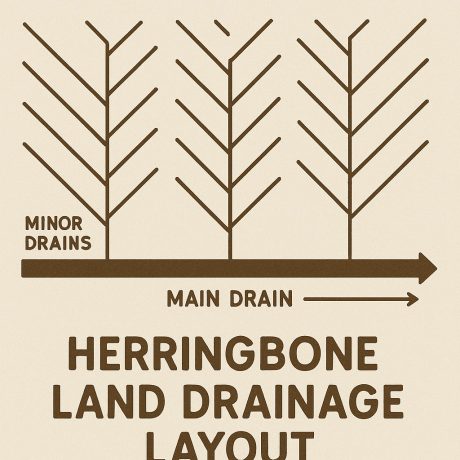
Herringbone Drainage
A herringbone layout uses smaller perforated drainage runs feeding into a larger main drain.
It is commonly used where a larger area needs to be drained efficiently.
Parallel Drains
Parallel drainage runs can be used across agricultural fields or larger areas of ground, with the drains feeding into a main carrier.
Interceptor Drain
An interceptor drain is positioned to intercept water travelling towards an area that needs protecting.
For example, it can be used between higher agricultural ground and a lower garden, driveway or building area.
The correct spacing, depth, pipe diameter and gradient depend on the site, soil conditions and expected water flow, so larger agricultural and civil projects should be designed appropriately rather than relying on a standard measurement.
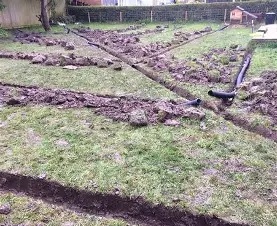
Installing Land Drainage
For a typical land drainage installation, the basic process is:
1. Set out the drainage route
Mark the proposed pipe runs and establish the levels.
2. Excavate the trench
Excavate to the required depth and width for the pipe, bedding and surrounding drainage material.
3. Establish the fall
The pipe needs an appropriate gradient towards the outlet so that water can flow effectively.
4. Install the bedding
Use suitable clean drainage aggregate or specified bedding material.
5. Lay the perforated pipe
Position the pipe correctly and check the alignment and gradient.
6. Surround the pipe
Backfill around the pipe with suitable clean drainage aggregate to allow water to reach the perforations.
7. Connect the system
Use appropriate connectors, junctions and carrier pipe to take the collected water towards the outlet.
8. Backfill the trench
Complete the installation using suitable backfill and reinstate the surface.
Installation requirements can vary considerably between agricultural, landscaping and civil applications. For larger schemes, professional design and installation should be considered.
Land Drainage Pipe Sizes
Land drainage pipe is available in a range of diameters and lengths.
The correct size depends on the amount of water being collected, the size of the drainage area and the overall system design.
Common sizes include:
Larger pipe may be required for main drains and higher-flow applications.
Don’t automatically choose the largest pipe available. The pipe diameter, drainage layout, gradient and outlet all need to work together as part of the complete system.
Wrapped or Unwrapped Land Drain?
For some applications, geotextile-wrapped land drain can provide additional protection against fine soil and sediment entering the pipe.
Wrapped drainage is particularly suited to certain sandy soils or applications where fine particles could otherwise enter the pipe.
However, wrapped pipe is not automatically required for every installation. Soil conditions and the drainage design should be considered before choosing the product.
We stock;
Land Drainage for Agriculture
Effective field drainage can make a significant difference to agricultural land.
A well-maintained drainage system can:
- Reduce waterlogging
- Improve field access
- Help maintain productive soil conditions
- Reduce standing water
- Improve ground conditions for machinery
- Help crops recover following wet weather
Existing drainage systems should also be maintained. Blocked outfalls, damaged pipes and poorly maintained ditches can reduce the effectiveness of the whole system.
Land Drainage for Paddocks & Equestrian Areas
Poor drainage can quickly turn paddocks and high-traffic areas into wet, muddy ground.
Land drainage can be considered around:
- Paddocks
- Gateways
- Field entrances
- Trackways
- Riding areas
- Stable yards
- Exercise areas
The drainage design should take account of the amount of traffic, ground conditions and where water can safely discharge.
Land Drainage for Building & Landscaping Projects
Drainage is also important around:
- Driveways
- Lawns
- Gardens
- Building plots
- Car parks
- Access roads
- Landscaping projects
- Commercial developments
Where water needs to be collected from the ground, perforated land drain may be appropriate.
Where water simply needs to be transported from one point to another, a solid underground drainage pipe may be more suitable.
For larger or heavily loaded installations, a stronger twinwall drainage system may be required depending on the application and installation conditions.
AJ Gammond Drainage Products
At AJ Gammond, we can supply a range of drainage products to help you build the right system, including:
Land Drainage Pipe
Perforated and unperforated options for collecting and carrying water.
Twinwall Drainage
Robust underground pipe for larger and higher-load applications.
Drainage Fittings
Connectors, junctions and accessories for joining drainage systems.
Geotextile & Drainage Materials
Products to support appropriate drainage installations.
MDPE Pipe & Water Management Products
For projects requiring additional water supply or underground pipework.
Need help choosing?
Not sure which pipe, size or fittings you need?
Speak to the AJ Gammond team before ordering.
Tell us:
- What are you trying to drain?
- Approximate area or length
- Soil type
- Where the water is coming from
- Where you intend to discharge it
- Whether the area will carry vehicles or machinery
We can help you identify the products you need and point you in the right direction.
Shop Drainage at AJ Gammond
From agricultural drainage and paddock improvements to landscaping, building and civil engineering projects, AJ Gammond supplies practical drainage solutions for trade and agricultural customers.
Browse our drainage range online or visit AJ Gammond in store.
For larger agricultural and civil drainage schemes, drainage design should be undertaken by a suitably qualified or experienced professional. Installation must comply with applicable site, environmental and regulatory requirements.